
7 Revenue Streams Caribbean Artists Ignore
If streaming was enough, most Caribbean artists would be financially free. Too many artists are looking at one income stream while standing on top of seven.
This isn’t about hustle culture.
This is about ownership culture.
Let’s break it down.
Publishing Royalties (The Invisible Check)
Every time your song:
Plays on radio in Toronto
Gets performed at a fete in London
Streams in New York
Is played in a club in Miami
It generates performance royalties on the songwriting side.
That money is collected by Performing Rights Organizations like:
ASCAP
BMI
PRS for Music
If your songs aren’t properly registered? That money either sits unclaimed or goes elsewhere.
Streaming pays for masters.
Publishing pays for compositions.
Two sides. Two checks.
Most Caribbean artists are only collecting one.
Mechanical Royalties (Yes, Streaming Pays These Too)
When your song is reproduced — physically or digitally — you earn mechanical royalties.
That includes:
Spotify streams
Apple Music downloads
Physical CDs (yes, still)
International digital stores
In many territories, mechanicals are collected separately from performance royalties.
If you don’t have publishing administration aligned globally, you’re likely missing a portion of this revenue.
It’s not sexy. But it’s structural. Structure is what scales.
Neighboring Rights (The Producer + Performer Money)
If you are:
A featured artist
A session musician
A producer credited on the master
You may be entitled to neighboring rights royalties when recordings are played publicly.
These are separate from songwriting royalties. They’re collected by different organizations in different countries. Most Caribbean producers have never registered for them.
Let that sit.
Sync Licensing (Film, TV, Ads, Gaming)
When your song lands in:
A Netflix series
A Hulu documentary
A commercial
A video game
A trailer
That’s sync.
Sync fees can equal months — sometimes years — of streaming revenue in one placement.
But here’s the catch:
You need:
Clear ownership
Registered publishing
Split sheets signed
Contactable rights holders
Music supervisors are not chasing down six writers across three islands with no paperwork.
Infrastructure gets synced.
Chaos gets skipped.
Live Performance Royalties (Yes, Even at Carnival)
When you perform your own song live, you generate performance royalties.
Festivals. Concerts. International tours.
Even Carnival stages.
If setlists are submitted properly, PROs track and distribute those earnings.
But if no one files the performance data? That money disappears into the system.
The diaspora tours are not just branding moments.
They’re royalty moments.
Brand & Licensing Deals
Brands love Caribbean sound.
They license it for:
Campaigns
Fashion shows
Resort experiences
Social media ads
Tourism campaigns
But licensing fees require negotiation, usage terms, and rights clarity. If you don’t know what rights you’re giving up, you may sign away more than you’re paid for.
Cultural influence without legal literacy is expensive.
Catalog Monetization (Your Long-Term Wealth)
Your songs are assets. They generate income over time.
They can be:
Licensed repeatedly
Pitched for sync
Administered globally
Used as leverage in partnerships
Even sold in part or whole
Globally, catalogs are being valued like property. Caribbean artists rarely think this way.
But the question is shifting:
Are you chasing hits?
Or are you building assets?
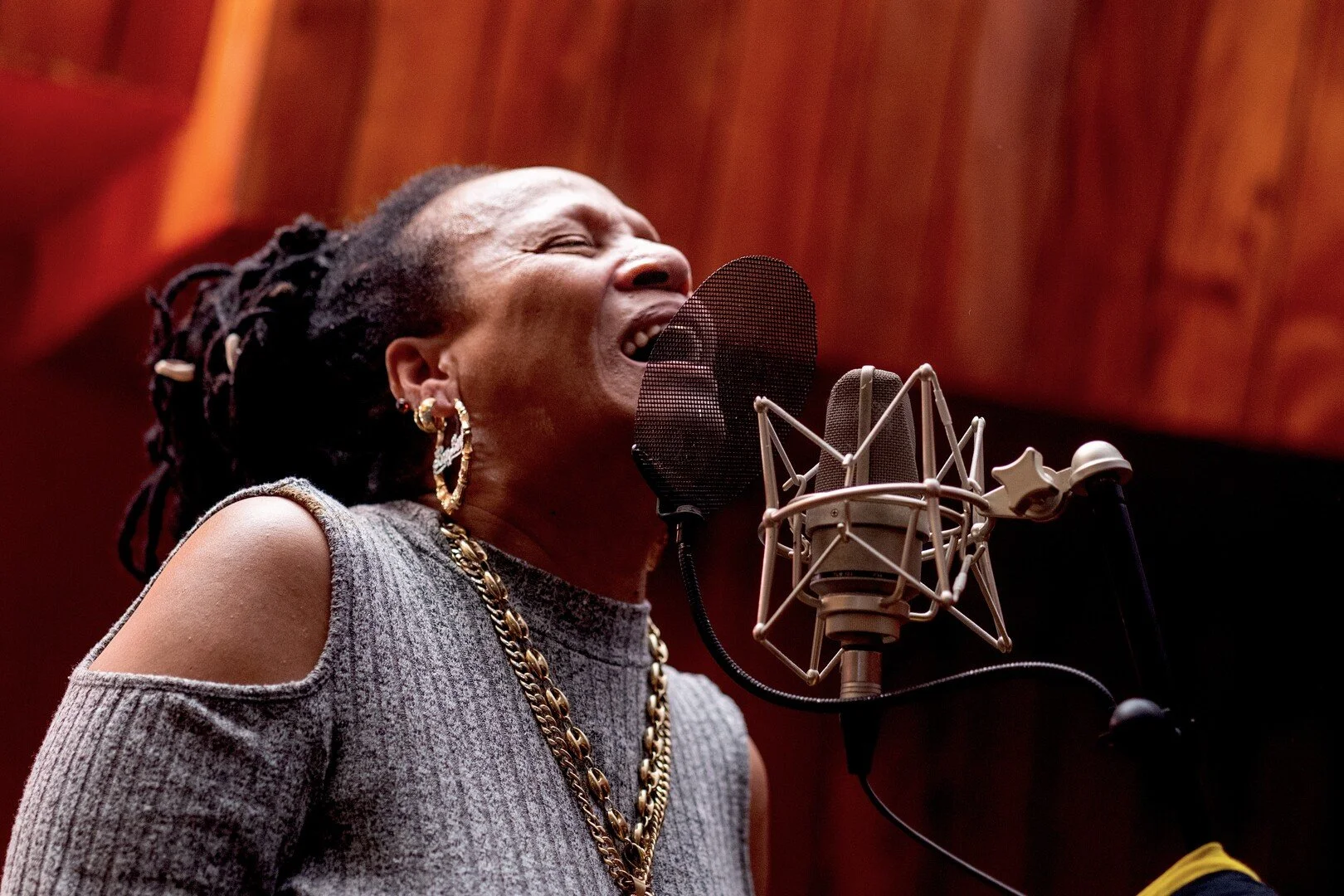
BAM BAM: THE SISTER NANCY STORY
When the film Bam Bam: The Sister Nancy Story ends, it doesn't feel like a conclusion. It feels like a question left unanswered. How does one of the most recognizable songs in the history of popular music generate value across four decades without its creator fully sharing in that return?
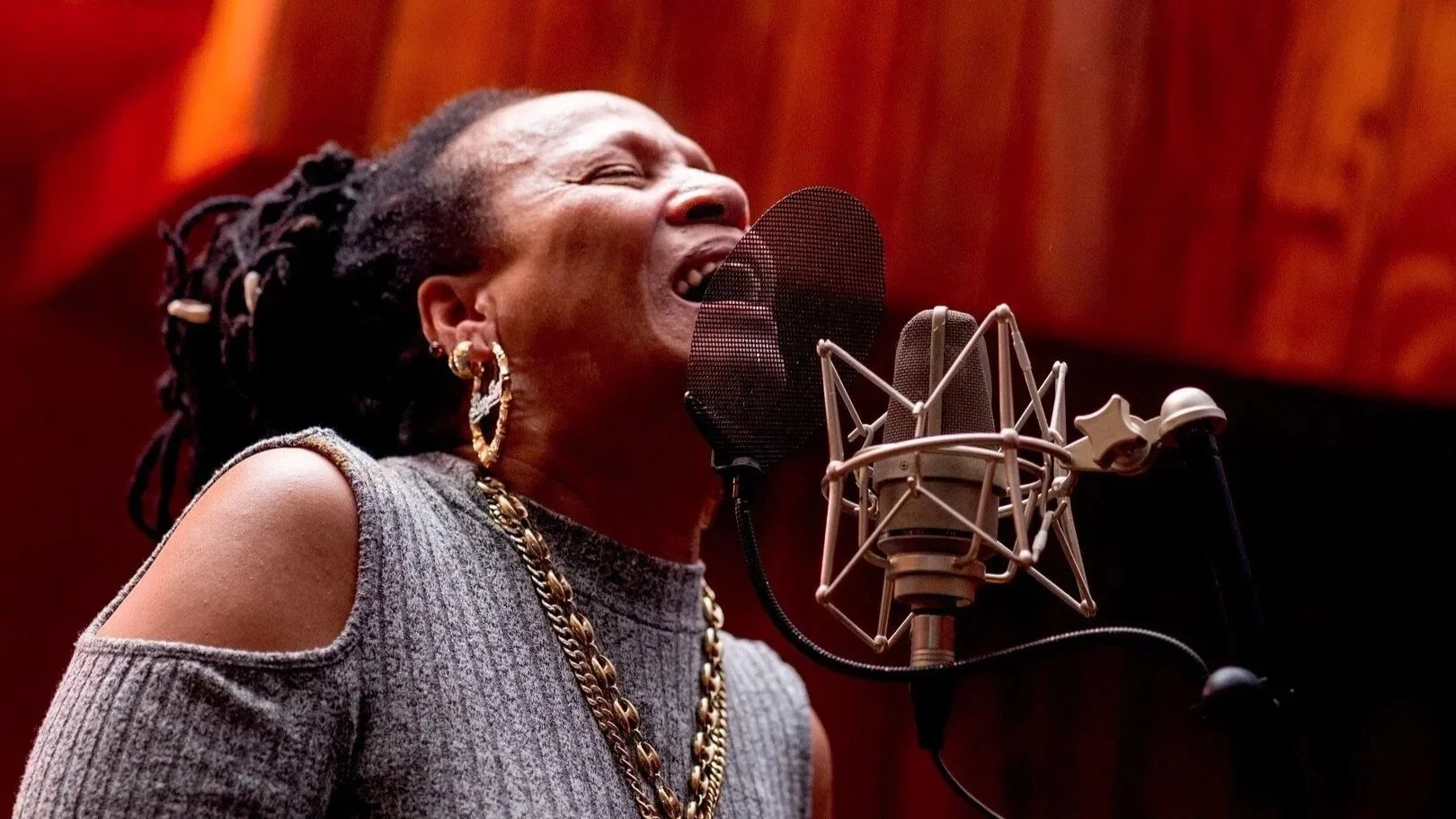
A still from the film “Bam Bam: The Sister Nancy Story” directed by Alison Duke.
WHAT Caribbean Music Must Learn About Ownership
When the film Bam Bam: The Sister Nancy Story ends, it doesn't feel like a conclusion. It feels like a question left unanswered. How does one of the most recognizable songs in the history of popular music generate value across four decades without its creator fully sharing in that return? The answer is bigger than Sister Nancy. It always was.
Caribbean music has never had an influence problem. Our sounds travel across continents without friction. They get sampled, interpolated, licensed, and absorbed into the bloodstream of global pop so thoroughly that the original source becomes almost invisible.
That invisibility is precisely the problem.
For decades, Caribbean creators exported sound without exporting structure. The culture scaled but the systems behind it didn't. That gap between cultural reach and economic return has a cost that compounds quietly, year after year, catalogue after catalogue.
The Asset Most Artists Leave on the Table
Every song contains two separate assets: the master recording and the composition. Most artists understand the first. Far fewer are positioned to benefit from the second.
Streaming pays both. Radio pays both. Licensing pays both. But publishing royalties don't move because a song is popular. They move because it is registered, documented, and connected to the infrastructure that recognizes it as yours.
Without that, revenue gets delayed, misallocated, or sits unclaimed in collection society accounts waiting for an owner who never shows up.
The Real Lesson of Sister Nancy’s Bam Bam

What the Sister Nancy documentary makes plain is something the industry has always known but rarely says directly: global impact does not guarantee global income. A song can be played on every continent, sampled by major artists, featured in film and television, and celebrated across generations, yet its creator can still not be paid properly for it.
Royalties follow data. They follow ownership documentation. They follow metadata. When that chain breaks, so does the money.
Metadata Is Not Administration. It's Identity.
In the modern music industry, metadata is how a song exists in the system. Songwriter names, ownership splits, publisher information, ISRCs, ISWCs. This is how works are tracked across borders and across time. When that information is missing or incorrect, the system cannot recognize the work. If the system cannot recognize it, it cannot pay it. It is that simple, and that consequential.
A catalogue built without clean metadata is a catalogue leaking money it will never recover.
The Opportunity Gap
A song's commercial life does not end at release. Catalogues continue earning through sync licensing, sampling clearances, re-releases, brand partnerships, and film and television placements, but only when ownership is clear enough for the people writing the cheques to act on it quickly. Music supervisors work on deadlines. Licensing teams need to know who owns what, who to contact, and who has the authority to say yes.
Unclear ownership creates friction. In a global market moving at the speed it does now, friction does not slow down opportunities. It eliminates them.
Ownership Is the Strategy
The lesson from Bam Bam is not about the past. It is about every Caribbean artist releasing music today.
Publishing is not paperwork. It is economics. Metadata is not a technical detail. It is the foundation on which royalties, licensing deals, and catalogue value are built. When ownership is properly established and documented, royalties flow, catalogues appreciate, international opportunities become accessible, and creators retain the leverage to negotiate from a position of strength rather than desperation.
Without it, artists build moments. With it, they build assets.
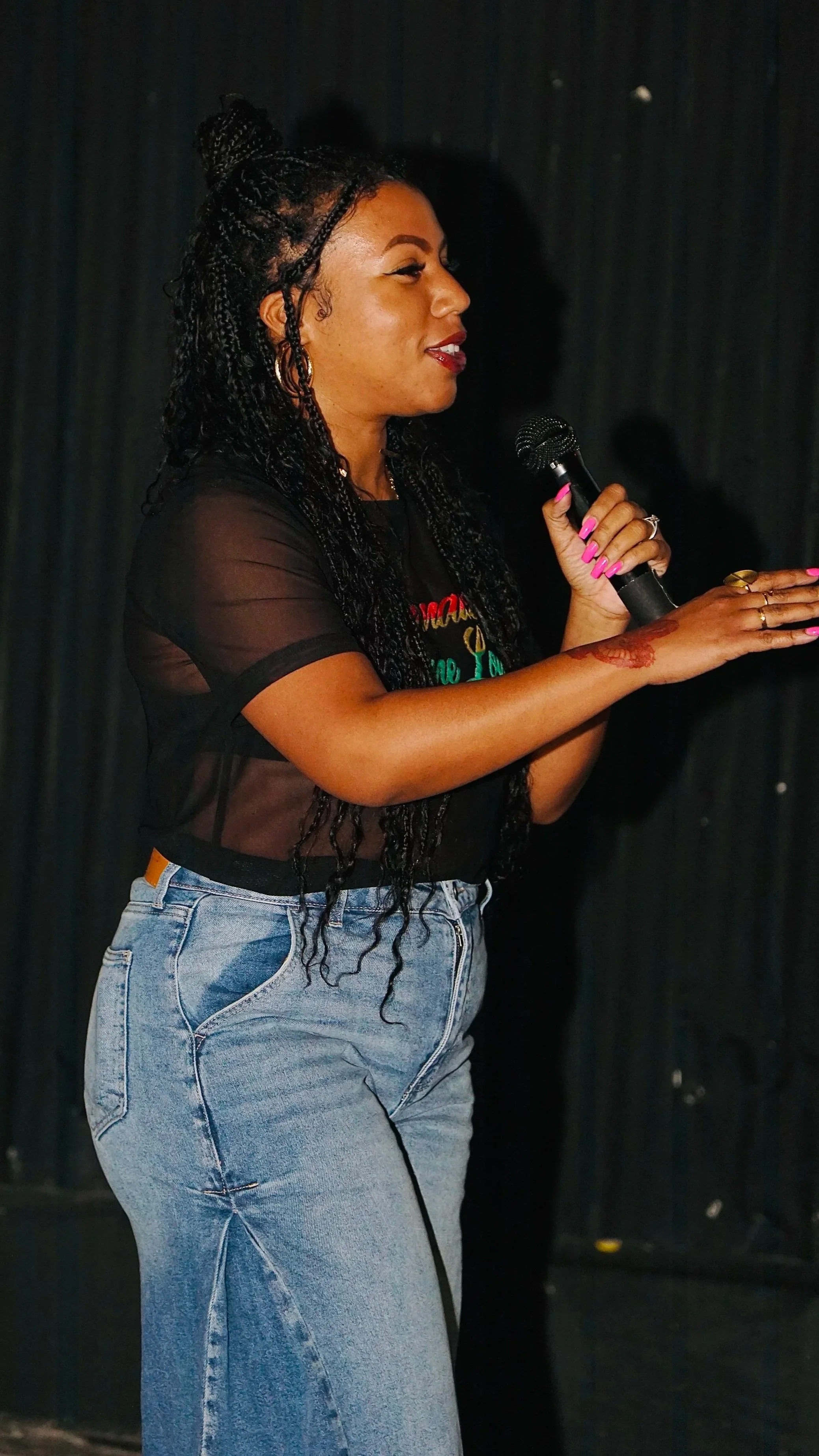
Melanie Jones Powell, Founder & Music Publisher - Soundline Music Caribbean
Building the Backend
At Soundline Music Caribbean, the work is the infrastructure behind the sound — publishing administration, song registration, metadata management, royalty collection, and sync-ready catalogue development. Not because Caribbean music lacks cultural power.
The problem has always been structural.
Culture will continue to move the way it always has. The only question is whether the money finally moves with it.
Why Caribbean Artists Lose Publishing Royalties
Why Caribbean Artists Lose Publishing Royalties And why infrastructure is the new flex.
Caribbean music is global. Our culture travels but the royalties and the money don’t always follow. And that’s the part we don’t talk about loudly enough.
And why infrastructure is the new flex.
Caribbean music is global.
Our culture travels but the royalties and the money don’t always follow.
And that’s the part we don’t talk about loudly enough.
For decades, Caribbean artists have exported sound without exporting structure. Our music blasts from music trucks on Carnival road to Brooklyn basements.
You hear it on the streets of Notting Hill to Afrobeats crossovers and takeovers in Ghana, Ibiza, and Portugal.
Dancehall samples are on Billboard charts and soca riddims echo in stadiums.
We’ve mastered the vibe.
We’ve mastered the movement.
We’ve mastered the influence.
But we did not build the publishing systems at the same speed the world is consuming our music.
So what happens?
Unregistered songs. Missing splits. Metadata mismatches. No global performance rights alignment. No sub-publishing representation in key territories.
And that equals one thing: Money left on the table.
There’s one thing that we need to clear up, which is that distributors are not publishers.
Uploading your track to DSPs is not the same as registering your songwriting globally. Streams pay recording royalties. Publishing pays songwriting royalties. Two different lanes. Two different revenue streams.
Too many Caribbean creators are collecting one and missing the other.
And when your music gets played on U.S. radio? When it lands in a Netflix scene? When it’s performed at a festival in London? When it’s sampled by an international act?
If your publishing isn’t structured properly, those royalties don’t automatically find you.
They sit in systems. Unclaimed.
That’s not a talent issue. That’s an infrastructure issue.
Afrobeats built publishing pipelines. Latin music built global rights bridges. Caribbean music? We’re still catching up administratively while leading culturally.
And the deeper layer: ownership is power.
Publishing is leverage. Metadata is documentation. Infrastructure is sustainability.
When we don’t control our publishing, we don’t control our long-term revenue. We build moments instead of equity. Hype instead of inheritance.
This is not about blaming artists. Most creators were never taught this side of the business. The region hasn’t historically invested in backend music education. We learned how to perform. We weren’t taught how to protect.
But the shift is happening.
Caribbean women are stepping into boardrooms. Producers are asking better questions. Artists are realizing that cultural dominance without financial systems is incomplete.
The next era of Caribbean music won’t just be louder.
It will be documented.
It will be registered.
It will be split correctly.
It will be paid properly.
Because culture moves the world. But infrastructure builds the future.