
BAM BAM: THE SISTER NANCY STORY

A still from the film “Bam Bam: The Sister Nancy Story” directed by Alison Duke.
WHAT Caribbean Music Must Learn About Ownership
When the film Bam Bam: The Sister Nancy Story ends, it doesn't feel like a conclusion. It feels like a question left unanswered. How does one of the most recognizable songs in the history of popular music generate value across four decades without its creator fully sharing in that return? The answer is bigger than Sister Nancy. It always was.
Caribbean music has never had an influence problem. Our sounds travel across continents without friction. They get sampled, interpolated, licensed, and absorbed into the bloodstream of global pop so thoroughly that the original source becomes almost invisible.
That invisibility is precisely the problem.
For decades, Caribbean creators exported sound without exporting structure. The culture scaled but the systems behind it didn't. That gap between cultural reach and economic return has a cost that compounds quietly, year after year, catalogue after catalogue.
The Asset Most Artists Leave on the Table
Every song contains two separate assets: the master recording and the composition. Most artists understand the first. Far fewer are positioned to benefit from the second.
Streaming pays both. Radio pays both. Licensing pays both. But publishing royalties don't move because a song is popular. They move because it is registered, documented, and connected to the infrastructure that recognizes it as yours.
Without that, revenue gets delayed, misallocated, or sits unclaimed in collection society accounts waiting for an owner who never shows up.
The Real Lesson of Sister Nancy’s Bam Bam

What the Sister Nancy documentary makes plain is something the industry has always known but rarely says directly: global impact does not guarantee global income. A song can be played on every continent, sampled by major artists, featured in film and television, and celebrated across generations, yet its creator can still not be paid properly for it.
Royalties follow data. They follow ownership documentation. They follow metadata. When that chain breaks, so does the money.
Metadata Is Not Administration. It's Identity.
In the modern music industry, metadata is how a song exists in the system. Songwriter names, ownership splits, publisher information, ISRCs, ISWCs. This is how works are tracked across borders and across time. When that information is missing or incorrect, the system cannot recognize the work. If the system cannot recognize it, it cannot pay it. It is that simple, and that consequential.
A catalogue built without clean metadata is a catalogue leaking money it will never recover.
The Opportunity Gap
A song's commercial life does not end at release. Catalogues continue earning through sync licensing, sampling clearances, re-releases, brand partnerships, and film and television placements, but only when ownership is clear enough for the people writing the cheques to act on it quickly. Music supervisors work on deadlines. Licensing teams need to know who owns what, who to contact, and who has the authority to say yes.
Unclear ownership creates friction. In a global market moving at the speed it does now, friction does not slow down opportunities. It eliminates them.
Ownership Is the Strategy
The lesson from Bam Bam is not about the past. It is about every Caribbean artist releasing music today.
Publishing is not paperwork. It is economics. Metadata is not a technical detail. It is the foundation on which royalties, licensing deals, and catalogue value are built. When ownership is properly established and documented, royalties flow, catalogues appreciate, international opportunities become accessible, and creators retain the leverage to negotiate from a position of strength rather than desperation.
Without it, artists build moments. With it, they build assets.
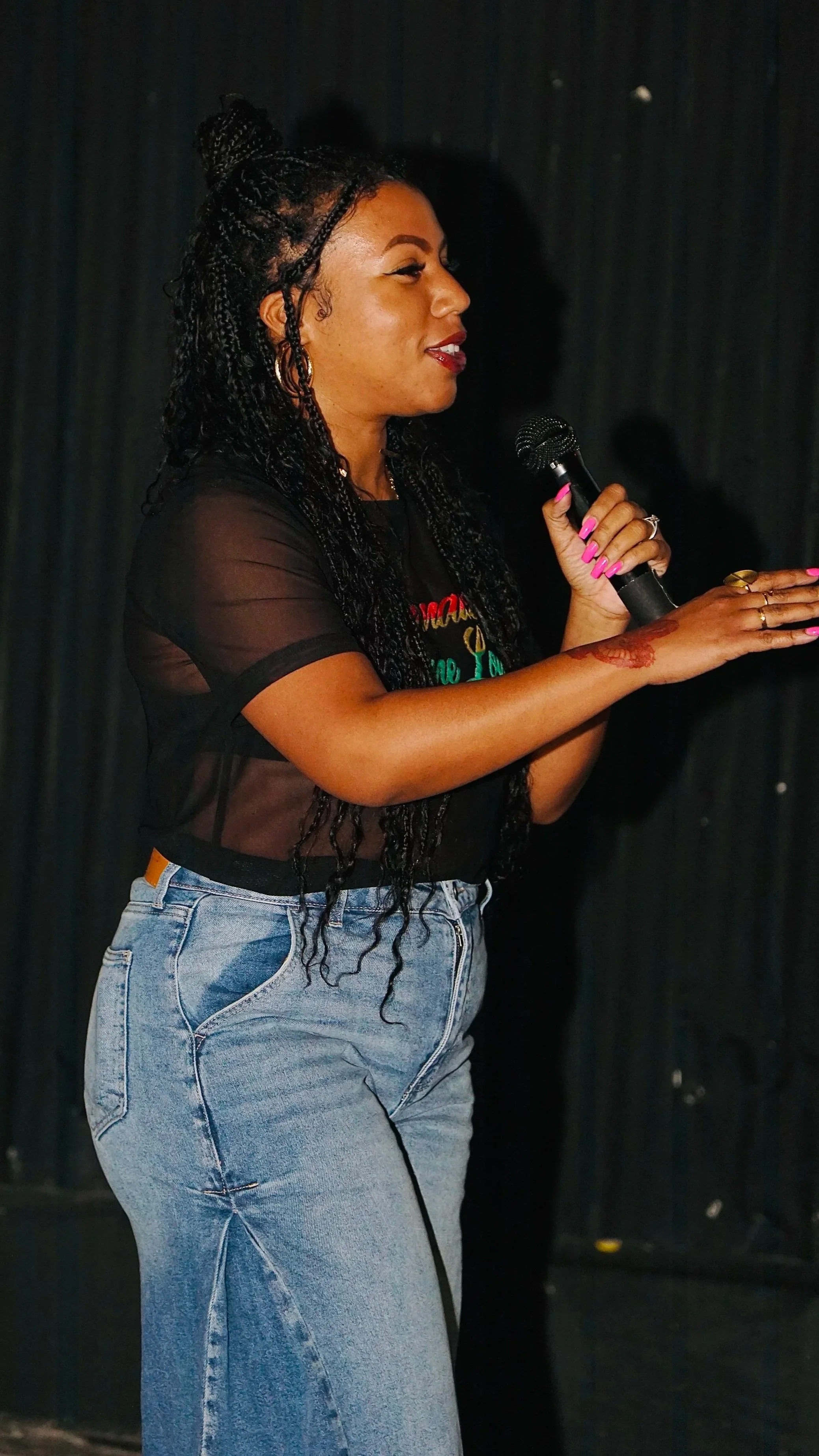
Melanie Jones Powell, Founder & Music Publisher - Soundline Music Caribbean
Building the Backend
At Soundline Music Caribbean, the work is the infrastructure behind the sound — publishing administration, song registration, metadata management, royalty collection, and sync-ready catalogue development. Not because Caribbean music lacks cultural power.
The problem has always been structural.
Culture will continue to move the way it always has. The only question is whether the money finally moves with it.