
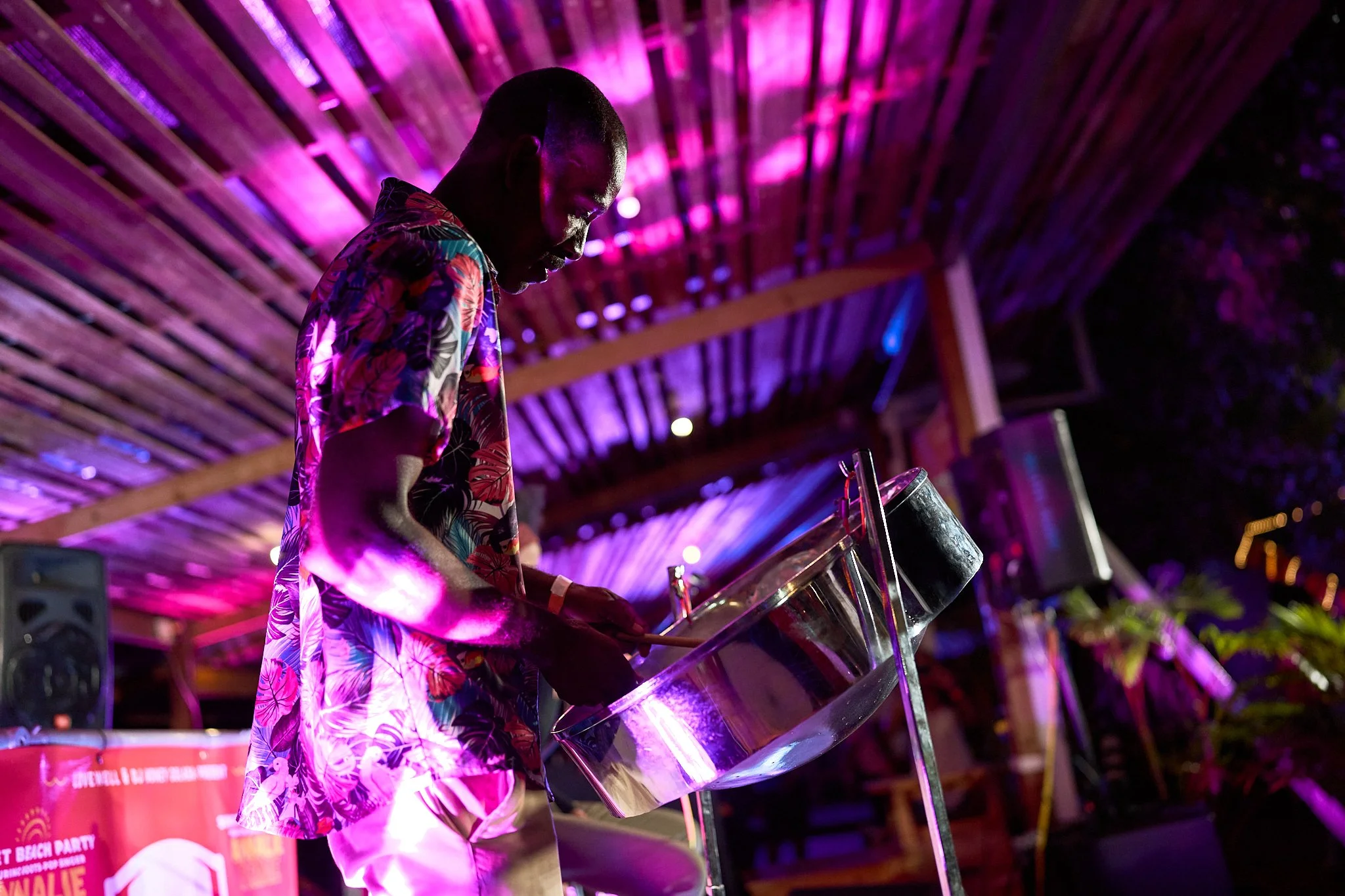
Caribbean Steelpan Connexcion at Sunset Beach Party
The Money Doesn't Travel the Way the Music Does
Even though our sound fills up stadiums, underscores films and floods festival fields worldwide, the paychecks that are due to Caribbean artists keep getting lost somewhere along the way.
Walk onto any Carnival road and you'll hear it: the music truck, the wall of bass, the whole street moving as one. Follow that same sound to a Brooklyn basement party or a London festival stage, and the DNA is unmistakable.
Caribbean music has been shaping global pop for generations.
The business behind it is a different story
Artists across the region have exported sound without exporting structure. The influence is undeniable, yet the paperwork, in too many cases, stays missing.
Songs go unregistered. Splits are never documented, or they're either duplicated or documented three different ways. Metadata doesn't match from one platform to the next. There's no alignment with performance rights organizations abroad and no sub-publisher working the key territories.
Every gap is a place where money quietly disappears.

Crowd at Sunset Beach Party
Distribution is the not the same as publishing administration
Caribbean artists get tripped up on a major distinction. Your distributor is not the same as your publisher. Getting your track onto streaming platforms is one thing. Registering your songwriting worldwide is another.
Streams generate recording royalties. Publishing generates songwriting royalties. They are separate revenue streams with separate gatekeepers, and plenty of Caribbean creators are collecting from only one.
The consequences show up in the places you'd least expect to lose money. A record gets spun on U.S. radio. A song lands in a Netflix scene. A set plays to a packed field in London. Another act samples a hook.
Each of those moments triggers a payment, but only if the songwriting is properly registered and the splits are on file.
If they aren't, the royalties don't hunt you down. They pile up in collection societies' systems, unclaimed, waiting for someone with the right paperwork.
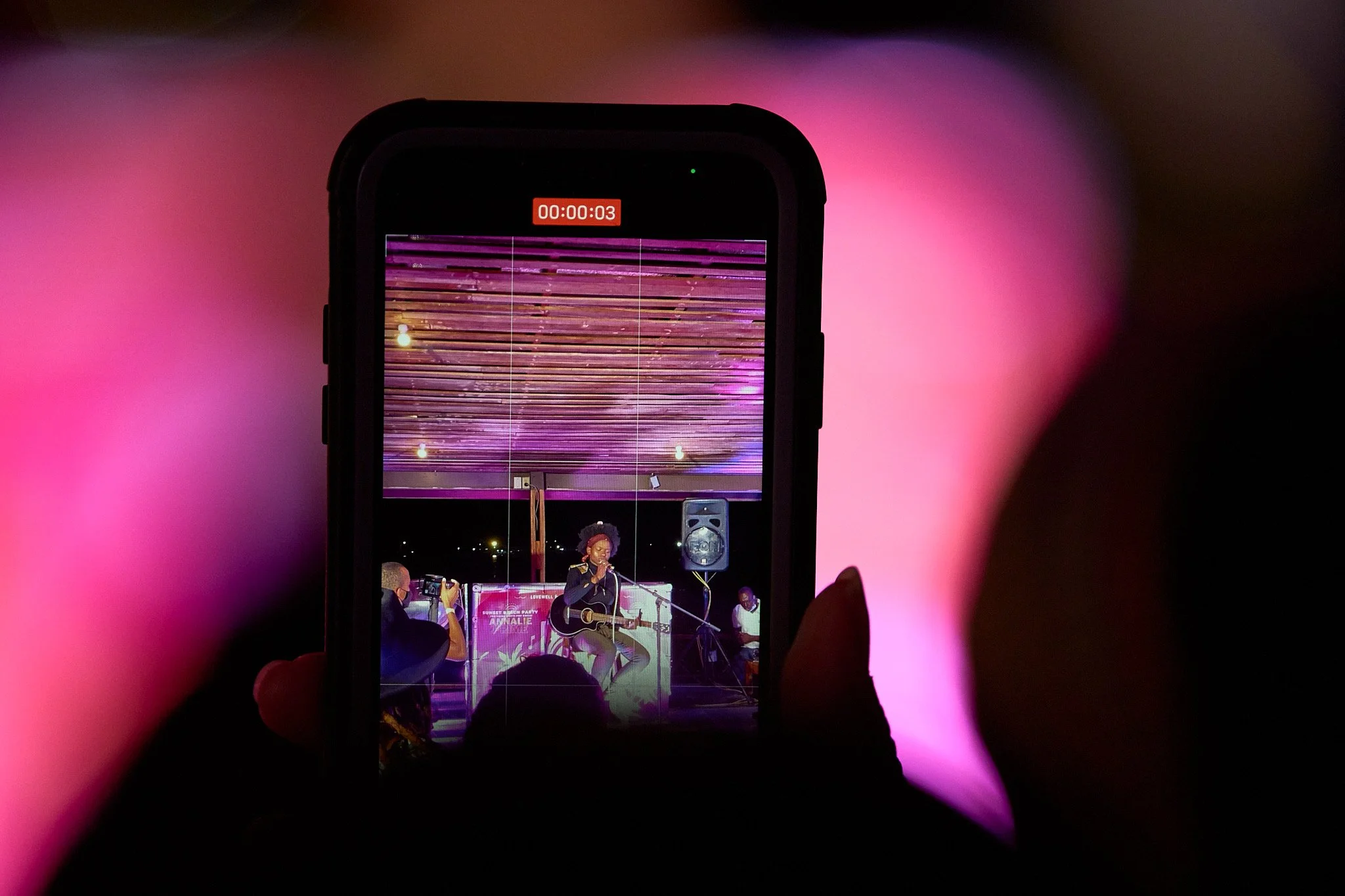
Annalie Prime
This is not a talent problem, It's an infrastructure ISSUE
The contrast with neighbouring scenes is hard to ignore. Afrobeats has built publishing pipelines to match its global momentum.
Latin music has constructed rights bridges that move money across borders. Caribbean music is still playing catch-up on the administrative side while leading the culture.
At its core, this is a question of ownership. Publishing is leverage. Metadata is proof. Infrastructure is what makes an income last.
Without control of the publishing, an artist doesn't control long-term revenue, and a career becomes a string of moments rather than a body of equity.

Violinist, Juri at Sunset Beach Party
Hype, but no inheritance
It would be easy to frame this as artists dropping the ball. However, most Caribbean artists were never taught the backend.
The region has never meaningfully invested in music business education, so generations of talented performers learned how to command a stage and were never shown how to protect the songs they wrote.
All of this is beginning to change.
Caribbean women are taking seats in boardrooms. Producers are asking sharper questions about splits and registrations before sessions, not after.
Artists are coming to terms with a simple reality: cultural dominance without financial systems is only half the victory.
The next chapter of Caribbean music won't simply be louder. It will be documented, registered, split correctly and paid in full.